
Is it just that the particular Ruler is being difficult, unwilling to accept the principles of democracy, wanting to return to feudalism and the absolute authority of the monarch?
I do not think so. There must be a reason why the Ruler refuses to accept the candidate named by the party. But the Ruler chooses not to reveal the reasons and indulge in public debates. He merely expresses his displeasure by refusing to do what normally the Rulers would do.
Concerned Malaysians must ask what has the particular candidate done which is so wrong that it incurs the displeasure of the Ruler.
There are lots of talks in the town. Terengganu is blessed with petroleum deposits. It should get 5% of the total earning from oil production. The Federal Government; fearing the previous PAS government might use this money wrongly had withheld payment.
But when the Barisan Nasional (BN) regained Terengganu the money, now called "Wang Ehsan", was lavishly spent by the Federal Government on Terengganu. It is not a small sum. Over these years "Wang Ehsan" totalled several billion.
We know that since the BN regained Terengganu in 2004, all kinds of projects have been developed in Terengganu. This includes The Monsoon Cup, luxury housing for sale to foreigners, Crystal Mosque and theme park, university, etc. Some of these projects are very good but many are totally unnecessary and wasteful.
But what the Terengganu people are saying is that all these mega projects costing billions of Ringgit have been contracted out to people outside Terengganu. Terengganu contractors got practically nothing.
But additionally, they say the contracts all went to one person and they are suspicious that behind this person are members of the first family.The rumours also say that the previous Mentri Besar was responsible for these things happening and of course, they think that he might have benefited financially.
The rumours went on to say that the Prime Minister might have influenced the Mentri Besar into doing wrong things. These are all rumours. It will be quite impossible to prove anything as the perpetrators are skilled in hiding themselves.
This is not good for a Government keen to abolish corruption and be transparent. To clear its name, an investigation should be made.
But the public is leery of investigations by Government agencies and departments. Even Royal Commissions are not highly regarded. The people believe, not true of course, that the Government has been interfering with the work of the Anti-Corruption Agency (ACA), the Police and the Attorney General (A-G)'s Chambers. The say this is borne out by the results of investigations by these agencies.
When a Deputy Minister was accused of accepting money for the release of a detainee, the A-G said there was no case because the detainee said he did not give any money to the Deputy Minister. It is so easy. If you have a case involving someone, all the enforcement agencies need to do is to ask him whether he was involved. If he says "no", then there is no case.
For some reason, judges are finding that people accused of murder are not guilty because of insufficient evidence by the police. Yet people who are totally not involved in a case, who were not accused of any misdeeds and who did not appear in court at all and been given a hearing are found guilty and publicly condemned.
The public cannot be blamed for not having faith in Government agencies doing investigations. The public cannot be blamed for suspecting cover-ups by the Government or worse still the Government may be using these enforcement agencies to threaten people.
To clear its good name, the Government should get credible foreign agencies to do the investigation. Of course, they must be given full access to the documents etc.
Now my detractors are going to say I did worse things when I was Prime Minister. Well, if that is so, let us have the foreign agencies investigate me also. I am aware that people are looking into possible misdeeds by me during my 22 years so as to threaten me and ask me to shut up. So far they have not found anything.
Not only have I not taken anything that was not due to me while I was Prime Minister but I have given back to the Government and the people everything that I had received as gifts during my tenure of office.
The Government had offered me land in Kedah and Langkawi and I had refused to accept. I have a 5-acre plot in Putrajaya which I paid for even though the Government was offering it to me free.
Unless there is a frame-up, I think there should be nothing to pin on me. Even other accusations against me, including the dismissal of judges, were not my doing and I do not feel obliged to apologise. Ask the Tribunal to apologise.
The person asking that the Government should apologise for what happened to Tun Salleh Abbas may have forgotten that as President of the Muslim Lawyers Association, he fully supported the action that was taken. He castigated the Bar Council for condemning Tun Hamid Omar over the dismissal of judges. Now he wants to be more correct than correct. I wonder why.
The Sun, 29th March 2008 Tun Dr Mahathir @ mykmu
Friday, March 28, 2008
Temporary


Tuesday, March 25, 2008
Tyranny everywhere preventing freedom of choice and self determination.
| Palestinian Killed as Israeli Troops enter Gaza | |||||||||||||||||||||||
| |||||||||||||||||||||||
24/03/2008 Israeli occupation troops killed an unarmed Palestinian and wounded another during a clash with Palestinian fighters on the border of the Hamas-run Gaza Strip on Monday, hospital officials and militant sources said.
|


Monday, March 24, 2008
Can we save our troubled planet?
| Sun, 16 Mar 2008 16:32:24 By Patricia Khashayar, MD., Press TV, Tehran | |||
He holds degrees in construction engineering, business administration and technological investment together with professional chartered and corporate qualifications in building. He has studied at the Universities of Leeds, Huddersfield, Bradford and The Open Business School (The Open University). Hill has received a DSc(Hon) higher doctorate from the academy of Sciences of the Republic of Kyrgyzstan in 2005. Q. As the executive director of "World Innovation Foundation", can you tell us more about the foundation and its goals? A. In 1992 after several years of research with other engineers and scientists the Institute of National Economic Enrichment and Development (The INEED) was formed, the pre-runner of the WIF. This group of scientists and engineers addressed the future economic development problems that the United Kingdom would face. It was therefore a nationalistic research body only interested in the United Kingdom. But in 1996 things changed when the great American scientist Nobel Laureate Dr. Glenn Theodore Seaborg (honored with Element 106 Seaborgium on the Periodic Table) joined the INEED and fundamentally changed its direction to become a globally focused group of advisers. Thereafter in 1997, The WIF was created to indicate this distinct change in emphasis from nationalistic values to global values. During these years the WIF undertook 'independent' and highly confidential reports for several countries. The WIF is an outwardly looking global institution now comprising of around 3,500 of the world's leading-edge 'independent' scientists, engineers, technologists and economists. They are generally regarded as the 'Peers' of their respective professions and sciences; most are listed in the ISI rankings of the foremost scientists in the world today. The WIF endeavors to provide unbiased advice to governments so that their people can be enriched in both social and economic terms. This is completely different to all other institutions around the world as our work is not singular nationalistic in nature, but plural in its thinking for all nations. Our advisory work covers all the sciences, technology, management and economics and where through 'independence' of our consultations, provide unbiased assessments for governments to act upon. In late 2005 the WIF became a registered Swiss charity and where the reason why Switzerland was chosen was due to its 'independent' neutrality status in the world at large - not a part of the European Union or the USA et al. The charity was established to undertake physical humanitarian projects in the field so that the WIF's eminent knowledge base could be put to good use and address highly needed work around the globe; assisting developing nations with expertise and projects; to help build their economies and hopefully to reduce the influence of wars that poverty and the lack of a basic life worth living brings. Q. What are the changes you see yourself making? A. The WIF brings a new dimension to the field of international help. We believe at the WIF that we can make a major difference in how the world evolves through cooperation, communication and collaboration of all nations. Indeed our strategy to bring together nations is a fundamental goal of the WIF. Therefore the WIF mechanism is a holistic process that thinks of the world at one entity and not a disparate number of nations fighting for their corner all of the time - a recipe we feel for constant unrest and conflict around the world. Our greatest problem is convincing politicians to adopt and adapt to this holistic approach to the development of the future world. For if they do not in this century, we certainly run the high risk to humankind disappearing forever off the face of our planet. In this respect, the writing is now on the wall for all to see (if they will look with intelligence), as the unfolding world state constantly exposes itself downwardly towards an existence that we shall not recognize eventually. Q. How is it that you became interested in this field? A. My late father was a great influence on my thinking. He had gone through one of the most horrendous wars ever, the Second World War, and where he was a medic/stretcher bearer working at the front lines from the D-Day landings to the liberation of Europe from the tyranny of the Nazi regime. Indeed, he was such a humanitarian that he risked his life for others constantly on the battlefields of Europe and where he was cited for the Victoria Cross but awarded the Military Medal with Oak Leaf (now the Military Cross) for there were not enough witnesses to corroborate what he had done. Sacrificing his own personal injuries (he was wounded three times whilst rescuing dying soldiers and where the Nazi war machine were bombarding the allied liberating troops 24 hours a day without relent. Many of his comrades literally blown apart at his side. Therefore my thinking through my late father has always been of helping others and where I too have sacrificed many things over the years, just like my father did in his life. The development of the WIF has been the eventual outcome of this humanitarian thinking. Q. How did start this project? Tell us about the obstacles you were faced with and your achievements? A. I have mentioned already the INEED, the pre-runner to the WIF. But prior to this innovative creation, there was five-years of post-university research that dealt with human success in terms of both social and economic development. In this respect, technology was at the very heart of all new wealth creation and where for any nation including the USA, they had to provide the new technologies year-on-year to expand the human experience for their people. In some ways, this was viewed as negative as well as a good thing. Therefore, after this research was concluded, several 'independent' contributors, which included engineers, scientists and business people suggested that we start an informal group of like-minded people to develop the concepts and basic ideas formulated at that stage. Thereafter the INEED was formed and where there were initially only eight members including myself. This group funded itself internally as a primary consideration was that we had to keep and secure our full 'independence of thinking' at all times. If not, we would not be able in many ways to tell it as it was due to possible commercial interests of any external funders. This premise has stayed with the WIF even today, where we still fund ourselves internally. Initially this total 'independence' made it extremely hard for a fledgling organization to start, as with all other like new entities, but as one year passed another and more people joined our group, these people started to open doors. Predominantly people who were or had been as an example, presidents of international academies and who were in some cases, advisors to prime ministers. Consequently, the INEED started undertaking 'independent' and unbiased reports on aspects that a particular government required. The determination of the good that these reports achieve cannot be judged, as the INEED's reports are not mandatory for implementation, but only to give unbiased advice to nations and where they can accept the findings or not. The only thing is that enlightened governments see the value and strength of WIF consultation reports and that has to be a good thing for the world-at-large. Q. What are humankind's main problems in the twenty-first century? A. The main problem for humankind in this present century are immense, the greatest that they have ever had to address. Indeed, if we do not get our act together as a species, we run the very high risk of our extinction. I say this with a heavy heart, but where the present economic development system is inherently flawed greatly in that we are all grasping for the world's finite resources that one-day will run out. We are only now starting to appreciate that we have to have a sustainable mechanism but where again I have sadly to say that there is still little evidence that the rhetoric by our politicians and global industrialists is turning into anything but a recipe for humankind's total demise.
Consequently, we have at some stage to start working for the whole planet and not just for nationalistic benefits to the demise of all others. The shareholder mentality has a great deal to answer here, as large companies have to increase wealth year-on-year. But where if we had a more innovative approach to business and sustainability, the world would prevent many of the problems that are now on the horizon for humankind. I do not have to go into great detail about what these are but give the following list, 1. Global Warming 2. Energy Security, Increasing Primary Energy Demand, Depleting Mineral Resources and Increasing global Pollution 3. International Terrorism and Fanaticism 4. Population Growth and its underlying consequences on Mother Earth 5. Famine and Food Security 6. Draught and acute water shortages to preserve life 7. Pandemics 8. Deforestation and Desertification 9. Increasing Natural Disasters brought about by 1 above 10. Increasing Environmental Disasters due to 1, 2, 4, 5 above Q. What are the effects of the rapid population growth on our Planet? A. The effects of a rapidly growing world population on human sustainability is critical. The United Nations has now revised its projections upwards for the number of humans six times in the last 15-years alone for those who would be living at mid-century. Indeed, they now say that by 2050 the world's projected population will be around 9.5 billion (a 45% increase on today's numbers), but where it could be even more. Unfortunately, I have to say that these projections by the UN are still low in my mind as there is no real internal rate of decline within the world's population growth. What I mean by this is although the trend is a slight decline year-on-year, based on the increased numbers at the end of each year, if we look at the starting point and base, we have a constant increase rate. Therefore, our projections are that by 2075, we shall have 12.5 billion humans at least and where the planet cannot sustain such numbers. It is impossible and that is why in this century we run again the very high risk of not just a continuation of minor wars but also the greater constant risk of a fully blown global war where the larger and more powerful nations step into the fold to secure their economic and strategic interests. Food will of course become a major issue and where this rush for agro produced fuels is a disaster as we reduce every year our capability to feed ourselves, especially now with the growing effects of global warming and decimated crops around the world. Indeed, the thinking behind agro-petrols et al is totally flawed, as we would need at least five worlds I am told to provide food and petrol products in this way so that we can sustain ourselves. Therefore, a further recipe for disaster in the years ahead. Q. Poverty, famine and inequality are the main problems in many countries…. A. You are right in that poverty, famine and inequality are three of the main problems in many countries and where these effects will unfortunately expand their reach in the world of tomorrow, for they will get far worse. Unfortunately I have to say again, on the world's present course, mapped out by our politicians and global corporations (more so the latter here), that with an increasing population of 1.25% per annum just to stand still and where this is an increasing heavier burden on the donor nations, there is no way that the problem will decrease. Indeed, increased failed crops and the consequential decrease in food harvests together with the rich getting richer by the year and the poor getting poorer by the year condemns this condition to become an absolute certainty. These problems add to the condition that it is a future recipe for conflict and a world where great uncertainty rules human's lives. Indeed a planet in constant chaos that will eventually on its present path, implode upon itself. But, this situation has not to be the case if nations would help each other to solve the world's problems together. In this respect if our goal is sustainability as a species, we have to learn to share the planet's constantly dwindling resources in a managed way so that future generations can support themselves. New technologies are the only real answer to many of humankind's problems, as only through the development of a new generation of sustainable technologies, will the world be able to provide for itself.
For without his life sustaining resource in place, humankind will not be able to feed, clothe or provide the necessary capability for all to exist. Therefore, the electrification of the world's rural areas is critical in proving for a sustainable world order without famine and disease. Q. Climate change is one of the preoccupations of humankind in today's world. Can you tell us about its long-term effects on our life? How can we prevent its negative effects? A. Climate Change will create a whole host of problems for the nations of the world during this present century. As it causes desertification and reduced landmass, people will consider living in even artic conditions and regions of the world that were never thought of in the centuries gone by. Indeed, ice cities and where these are now on the drawing board for future eventualities and where this is not an over statement, as artic cities have already been mooted to provide for the people in future years. As sea levels rise, this will also add to the fact as even more land will be lost to the oceans and where there just will not be enough economic land area to sustain human life in its present state. In some ways, if ever the Atlantic Conveyor stops, we will have no other alternative in the Northern hemisphere which encapsulates most of the develop nations of the world. Prevention of climate change is in the hands of our politicians, global industrialists and the people themselves. Governments still have a predominantly nationalistic view and therefore will try and obtain as much wealth for themselves as they can at the general expense of all other nations and their people. Therefore it is still a dog eat dog situation and I see no real change in this respect in the mindsets of our political leaders. Indeed, I see even more of this unsustainable way of developing the world emerging, as the world's finite resources continue to deplete at an alarming rate. But added to this as politicians are well connected with global industry also, I see no chance of any major movements away from the capitalist system, which is unrealistic and unsustainable in the long term. Therefore, if politicians do not change their spots and industrialists do not stop catering to their shareholders, we have little hope of finding any solutions for global warming and all the harm that this will bring to humankind. What governments should be doing is to invest heavily in new technological discoveries that address the world's huge problems in a holistic way. Industry should be doing likewise. But unfortunately what we see happening is the opposite and where new discoveries that would help humankind, are being stifled by industry on the altar of quick profits that shareholders demand. In this respect we know of many inventions that would help mankind that have been shelved in this respect, as the company's bottom-line is paramount and any new invention that threaten this base is eradicated. So we have with the capitalist system, highly negative overtones that although they have not hurt humankind much to date (others will say differently), over the next fifty years they will and in a highly undesirable way. Therefore, the people have to make governments and industry change all this. That is the only real way that we can prevent the catastrophes that will come as night follows day in the 21st century. Q. Many years ago pox pandemics were the main cause of death. Later Ebola and SARS replaced Pox, and today bird flu is the cause of many problems. A. Pandemics will eventually arise and where we have to be prepared for the worst. In 1918 'Spanish Flu' caused the deaths of at least 20 million people worldwide and where some modern estimates conclude that up to 100 million may have perished. The problem this time is that with world travel being what it is today with on average 8 million people at least flying internationally every day of the year, a pandemic will spread like wildfire throughout the globe. In this respect also we have no real defenses against such killer diseases as human-to-human 'bird flu', as Tamiflu et al is only a herbal remedy that does not cure but only alleviates the symptoms and no more. Indeed, the Vietnamese doctors who have had to try and stem the bird flu outbreak in humans in their country have said that Tamiflu is 'useless' and saved none of their patients. Unfortunately, when the pandemic comes, as the World Health Organization says that it is only a matter of time, we will have no cure. I say this as we have been trying for as long as I can remember to find a cure for the 'common cold' and where we have never found one. Therefore is we cannot find a cure for this, in probably the whole history of pharmaceuticals, we have no chance of finding a cure for bird flu in say a few weeks when the outbreak eventually happens. For in 1918 Spanish Flu did its worst in the first 25-weeks (and where the major transport around the world then was ships that took many weeks to cross the Atlantic alone). Now with rapid transit, human bird flu will take a fraction of this time and if common sense views this, we have little chance to prevent the probably deaths of hundreds of millions of lives that will be lost this time around. That is why we have been trying to get large organizations and governments to tackle the problem at source with no result to date. In this respect India, where we wrote to their prime minister two months ago, but have had no reply even though he greatly believes in addressing the problem at its source. The reason we feel is down to the profit driven nature of society today and where there is no great profit in fieldwork, only in selling drugs to people. But I have to say that only by addressing the problem of bird flu at its source, do we really stand any chance of defeating this killer disease that attacks children and the young far more than elderly people it appears. Heading up our quest to defeat bird flu is Emeritus professor Kennedy Shortridge who was awarded the Asian equivalent of the Nobel Prize for stopping a probably pandemic of human bird flu happening in 1997. He is the leading mind in the world in preventing bird flu at its source and where governments have to start taking seriously the thinking of the eminent professor before it is far to late for us all. For what is money if you are dead and your family with it. Q. Do you have any specific comments or advice for our viewers? A. I say to you and your readers that they should over the next few decades (for these will be the most critical decades for humankind's future, if it is to have one), apply a socio-economic system where their governments start a process of greater cooperation and collaboration so that all other nations can follow. This is the only way that the people of this planet will survive past this present century. I say this as the present socio-economic thinking (the individual maximization profit generation dictum), cannot solve or support a constantly rising world population, declining food stocks and a world with dwindling resources that sustains life. That is why the WIF is proposing the establishment of inter-nation research incubators that solve the world's problems together. For only together can we ever hope to sustain the human experience and where without such a mechanism in place, the world has literally no real chance at all. I hope that some of your readers can take up this challenge and where it is a strategy really for our very survival. | |||


Terengganu MB: PM or Sultan’s choice? (updated)
PETALING JAYA: The Terengganu Mentri Besar should be a person who has the confidence of the state assembly, a constitutional law expert said. Universiti Teknologi Mara Law professor Dr Shad Saleem Faruqi said the position of Kijal assemblyman Datuk Ahmad Said would not be safe even if he was appointed the Mentri Besar by the Sultan of Terengganu. He said although the Sultan had the discretion in appointing Ahmad as the new Mentri Besar, legally this could be disputed because the person has to command the confidence of the majority of the assembly. “The Sultan has discretionary powers but this discretion is not absolute. The Sultan is not bound to listen to the advice of Umno divisions or the Federal Government but he has to listen to the state assembly,” he added. Prof Shad also said that Ahmad, however, has the option of waiting 90 days – until May 13 – to consolidate his powers before convening the state assembly. “This means he can appoint new state executive councillors, including those from the six PAS assemblymen, or he can even call for a state election,” he said. Prof Shad said the state assembly or even Umno assemblymen could pass a vote of no-confidence against Ahmad. “This scenario has happened several times before in Sarawak, Selangor and Kelantan in the 1960s and 1970s, where the Chief Ministers or Mentris Besar were either voted out of office or replaced,” he said. The office of the Sultan of Terengganu announced Saturday that Ahmad would be the new Mentri Besar of Terengganu instead of Datuk Seri Idris Jusoh. Idris was the choice of Prime Minister Datuk Seri Abdullah Ahmad Badawi as well as the majority of state assemblymen, but 51-year-old Ahmad had the support of seven of the eight Umno division leaders in the state who lobbied for his appointment at the last moment. Ahmad was given his letter of appointment at 8.30am Sunday, but palace officials have fixed an indefinite date for the swearing-in ceremony, which was widely expected Sunday as well. He was stripped of his Umno membership for disobeying the party leadership. Prof Shad said that Ahmad could go to the courts and claim that his expulsion and removal as Mentri Besar were against "natural justice." "Umno can also go to court on the basis that his appointment had gone against the Terengganu Constitution," he said. Ahmad has two choices, Prof Shad added: He step down and let the Regency Advisory Council appoint a new Mentri Besar, or he could dissolve the state assembly.
Arab media warns Bush wants Iran war
 Sun, 23 Mar 2008 05:57:40
The UAE-based newspaper, Gulf News, in its Friday's editorial said that with George W. Bush in office the Washngton is effectively maintaining low intensity warfare with Iran and the potential exists to ratchet it up to more open hostilities.
The source asserted that the recurring visits by the US Vice President Dick Cheney and John McCain to Iraq and occupied Palestine are surely not 'coincidences' but a means to ensure Israel remains fully in the picture for any "plans the US could have against Iran".
The report has undermined the position of hawkish politicians who were beating the drums of war with Iran.
Cheney will also underlines that "the administration now buys British, German, French and Israeli intelligence estimates that Iran is indeed pressing forward with programs for building nuclear weapons, warheads and ballistic missiles for their delivery."
Meanwhile, Al-Ahram Weekly described Admiral William Fallon's recent resignation as an orchestrated move to remove what it called the only obstacle "standing between the administration and their newest war plan".Adm. William Fallon, resigned amid reports that he is challenging the White House over Iran, will not appear before Congress to discuss the Iraq war.
The weekly also added the disaster the Bush administration has created in Iraq is clearly not going well. As a result, the administration may feel that engaging the US militarily in Iran is their only option to for seeing a Republican president elected and a staunch military advocate like John McCain fits that bill.
On Wednesday, an aide to Cheney said that, the United States will need the cooperation of Oman, Saudi Arabia, Israel and Turkey to mount a military attack on Iran.
Meanwhile Saudi Arabia's King Abdullah, in a meeting with Cheney on Friday, expressed his opposition to any US military action against Iran, saying that negotiation is the best and the only effective way to resolve Tehran's nuclear standoff.
The Saudis say any nuclear non-proliferation efforts should include Israel, which is widely believed to be the only nuclear power in the Middle East with around 200 nuclear warheads.
The National Intelligence Estimate (NIE) and the International Atomic Energy Agency (IAEA), in their latest reports have reassured the world that the nature of Iran's nuclear activities is peaceful.
 USS Montpelier crossing the Suez Canal, Feb. 2003 |
Egyptian officials reported that the nuclear submarine crossed the canal along with a destroyer on Friday and Egyptian forces were put on high alert when the navy convoy was passing through the canal.
The deployment comes as recent reports allege that US Vice President Dick Cheney is seeking to rally the support of Middle Eastern states for launching an attack on Iran.
This is while US officials deny that Cheney's Mideast tour is linked to a possible military attack on Iran.
According to the latest reports, in recent months a major part of the US Navy has been deployed in and around the Persian Gulf.
The fleet is armed with nuclear weapons and cruise missiles and carries hundreds of aircraft and rapid reaction forces.
Presstv
Wednesday, March 19, 2008
Kabinet: Ada pihak 'memberontak'?
Datuk Seri Rafidah Aziz, Menteri Perdagangan Antarabangsa dan Industri, yang digugurkan hari ini, pula dijangka mengadakan satu sidang media di Kuala Lumpur esok.
Rafidah dijangka mengumumkan perletakan jawatannya sebagai Ketua Pergerakan Wanita UMNO Malaysia dan mungkin juga akan mengosongkan kerusi Parlimen Kuala Kangsar.
Sumber-sumber memberitahu blog ini bahawa perlantikan tersebut dikatakan dibuat oleh Abdullah apabila Shahrizat dengan serombongan pegawai utama Pergerakan Wanita UMNO Malaysia mengatakan kepada Abdullah bahawa Rafidah akan meletakkan jawatan Ketua Wanita UMNO Malaysia.Akibatnya, tiga Ahli Parlimen BN diberitakan akan menolak perlantikan oleh Abdullah - seorang dijangka menolak perlantikan sebagai menteri sementara dua orang lagi dijangka menolak perlantikan sebagai timbalan menteri
Terbaru Ahli Parlimen Kimanis, Sabah, Datuk Anifah Aman membuat kenyataan bahawa beliau menolak pelantikan sebagai Timbalan Menteri Pengangkutan seperti yang diumumkan Abdullah petang semalam.
DALAM satu perkembangan yang belum disahkan. Khabar angin tersebar bahawa Datuk Seri Tengku Azlan Abu Bakar yang dilantik sebagai Timbalan Menteri Luar Negeri menolak jawatan tersebut. Bagaimanapun sehingga jam 2.10 pagi ini, belum ada pengesahan dibuat oleh mana-mana pihak.
source klpos
PM announces new Cabinet line-up
*The full list:*
*Prime Minister Datuk Seri Abdullah Ahmad Badawi*
*Deputy Prime Minister Datuk Seri Najib Tun Razak*
*Ministers in the Prime Minister's Department*
Tan Sri Bernard Dompok
Datuk Seri Nazri Aziz
Datuk Ahmad Zahid Hamidi
Datuk Mohd Zaid Ibrahim
Datuk Amirsham Abdul Aziz
*Deputy Ministers in the Prime Minister's Department*
Datuk Johari Baharom
Datuk Dr Mashitah Ibrahim
Datuk K. Devamany
Datuk Hassan Malik
*Finance*
Minister - Datuk Seri Abdullah Ahmad Badawi
Second Finance Minister - Tan Sri Nor Mohamed Yakcop
Deputies - Datuk Ahmad Husni Hanadzlah, Datuk Kong Cho Ha
*Defense*
Minister - Datuk Seri Najib Tun Razak
Deputy - Datuk Wira Abu Seman Yusop
*Internal Security and Home Affairs*
Minister - Datuk Seri Syed Hamid Albar
Deputies - Datuk Chor Chee Heong, Senator Wan Ahmad Farid Wan Salleh
*Housing and Local Government*
Minister -Datuk Ong Ka Chuan
Deputies - Datuk Robert Lau , Datuk Hamzah Zainuddin
*Works Minister*
Minister - Datuk Mohd Zin Mohamad
Deputy- Datuk Yong Khoon Seng
*Energy, Water and Communications*
Minister - Datuk Shaziman Abu Mansor
Deputy- Datuk Joseph Salang Gandum
*Agriculture and Agro-based Industry*
Minister - Datuk Mustapa Mohamed
Deputy - Datin Paduka Rohani Abdul Karim
*International Trade and Industry*
Minister -Tan Sri Muhyiddin Yassin
Deputies- Loh Wei Keong, Datuk Jacob Dungau Sagan
*Foreign Affairs*
Minister -Datuk Seri Dr Rais Yatim
Deputy- Tunku Azlan Abu Bakar
*Education*
Minister -Datuk Seri Hishammuddin Hussein
Deputies -Datuk Wee Ka Siong, Datuk Razali Ismail
*Higher Education*
Minister - Datuk Khaled Nordin
Deputies - Khoo Kok Choong, Datuk Idris Harun
*Transport*
Datuk Ong Tee Keat
Deputy - Anifah Aman
*Human Resources*
Datuk S. Subramaniam
Deputy- Datuk Noraini Ahmad
*Women, Family and Community Development*
Minister-Datuk Dr Ng Yen Yen
Deputy- Noriah Kasnon
*National Unity, Culture, Arts and Heritage *
Minister- Datuk Shafie Apdal
Deputy-Datuk Teng Boon Soon
*Science, Technology and Innovation*
Minister- Datuk Dr Maximus Ongkili
Deputy- Fadilah Yusof
*Entrepreneurial and Cooperative Development*
Minister - Datuk Noh Omar
Deputy- Datuk Saiffuddin Abdullah
*Natural Resources and Environment*
Minister - Datuk Douglas Unggah Embas
Deputy - Datuk Abu Ghapur Salleh
*Rural and Regional Development*
Minister - Tan Sri Muhammad Muhd Taib
Deputy- Tan Sri Joseph Kurup
*Domestic Trade and Consumer Affairs*
Minister - Datuk Shahrir Samad
Deputy - Jelaing Mersat
*Plantation Industries and Commodities*
Minister - Datuk Peter Chin Fah Kui
Deputy- Senator A. Kohilan
*Youth and Sports*
Minister - Datuk Ismail Sabri Yaacob
Deputy - Wee Jack Seng
*Health*
Minister - Datuk Liow Tiong Lai
Deputy- Datuk Dr Abdul Latiff Ahmad
*Information*
Minister - Datuk Ahmad Shabery Cheek
Deputy- Datuk Tan Lian Hoe
*Tourism*
Minister - Datuk Azalina Othman
Deputy - Datuk Sulaiman Abdul Rahman Abu Taib
*FT*
Minister - Datuk Zulhasnan Rafique
Deputy- M. Saravanan
Monday, March 17, 2008
Thursday, March 13, 2008
Anwar perlu berkerja untuk bentuk Kerajaan Persekutuan- Pensyarah
| Oleh Tarmizi Mohd Jam - KLpos.com | |
| Rabu, 12 Mac 2008 | |
| DENGAN jumlah 82 kerusi yang dimiliki sekarang, parti-parti pembangkang di bawah Barisan Rakyat – DAP, PKR dan PAS – Anwar perlu bekerja untuk membentuk Kerajaan Persekutuan. Demikian pendapat Profesor Dr. Abdul Aziz Bari dari UIAM ketika dihubungi. Beliau berpendapat apa yang disebut oleh Dato Seri Anwar Ibrahim hari ini sebagai "government in waiting" perlu dimulakan penubuhannya. Dr. Abdul Aziz berkata Kerajaan Barisan Rakyat perlu diwujudkan di peringkat Persekutuan untuk mempermudahkan kerja lima kerajaan negeri yang telah dibentuk di Kelantan, Kedah, Perak, Pulau Pinang dan Selangor. "Kerajaan Persekutuan itu perlu kerana sistem Perlembagaan kita meletakkan terlalu banyak kuasa dan sumber kewangan di tangan Kerajaan Pusat. "Tanpa Kerajaan Pusat yang mesra dengan mereka, negeri-negeri berkenaan akan mengalami laluan sukar sebagaimana yang telah kita dilihat di masa lalu", tegas Dr. Abdul Aziz. Antara contoh-contoh yang telah berlaku sejak merdeka ialah Sarawak pada 1966, Kelantan dan Terengganu sejak 1959 dan Sabah pada 1985. Pulau Pinang juga mengalami nasib yang sama sebelum Gerakan menyertai Barisan Nasional pada 1974. Selain itu banyak undang-undang yang perlu dikaji dan dimansuhkan. Ini termasuk Akta Keselamatan Dalam Negeri (ISA), Akta Mesin Cetak dan Penerbitan 1984, Akta Polis 1967 dan Akta Universiti dan Kolej Universiti 1971. Inilah kekangan-kekangan yang selama ini membelenggu kebangkitan rakyat. Pakar Perlembagaan itu memberitahu bahawa di dalam Barisan Nasional kebanyakan parti – kecuali Umno – sebenarnya tidak selesa dengan undang-undang itu tetapi terpaksa mengikut telunjuk Umno. Prasarana baru perlu dibina dengan membersihkan sistem kita dari undang-undang yang ketinggalan zaman itu, tegas Dr. Abdul Aziz. Tanpa prasarana itu apa yang diwar-warkan oleh Anwar sebagai fajar baru untuk Malaysia akan tinggal mimpi dan angan-angan sahaja, ujar beliau. Profesor Undang-Undang Perlembagaan itu menyatakan kesemua yang disebut di atas boleh dibuat tanpa kekuatan dua pertiga. "Contohnya untuk meluluskan akta mengenai IPCMC yang akan memantau pasukan polis tidak perlukan undi dua pertiga. Hanya meminda peruntukan-peruntukan tertentu Perlembagaan sahaja yang memerlukan sokongan dua pertiga", tegas Dr. Abdul Aziz lagi. Dengan membentuk kerajaan Persekutuan, Anwar akan dapat membersihkan pasukan polis, memulakan reformasi badan kehakiman dan memberi sokongan kepada pembersihan di dalam SPR dan sistem pengundian. Ini semua perlu supaya kemenangan berharga yang dicapai pada 8 Mac lalu dapat dipertahankan selepas ini. Dr. Abdul Aziz bagaimanapun memberitahu bahawa secara tidak langsung komposisi di dalam Dewan Negara akan berubah selepas ini kerana sudah pasti lima negeri di bawah Barisan Rakyat akan menghantar senator yang berbeza untuk mewakili negeri masing-masing. "Saya yakin selepas ini prosiding di dalam Dewan Negara akan lebih panas. Ketika ini ramai yang menguap dan membuang masa di situ", tambahnya. Senator-senator Umno yang ada sekarang sudah pasti akan mengalami kejutan. Di bawah Perlembagaan setiap negeri berhak menghantar dua orang senator untuk mewakili negeri masing-masing. Berbalik kepada soal pembentukan kerajaan, pakar Perlembagaan itu menjelaskan bahawa kerajaan yang dibentuk di bawah sistem Westminster boleh ditumbangkan bila-bila masa: tidak seperti di bawah sistem Amerika sesebuah kerajaan di bawah sistem British itu tidak mempunyai jangka hayat yang tetap. "Paling lama ialah lima tahun yakni usia dewan. Kerajaan itu juga boleh kekal untuk beberapa hari sahaja", jelasnya. Beliau berkata, di bawah sistem Amerika kerajaan itu mempunyai jangka hayat yang tetap yakni empat tahun. "Dan itulah sebenarnya kelemahan sistem Amerika dan di sinilah kelebihan sistem British di mana ia boleh dijatuhkan bila-bila masa", kata Dr. Abdul Aziz lagi. Beliau memberitahu, sekurang-kurangnya ada dua cara untuk melakukan perkara itu. Yang pertama melalui undi tidak percaya, yang sekiranya berjaya akan memaksa kerajaan yang ada meletakkan jawatan. Yang kedua ialah dengan mengajak Ahli-ahli Parlimen dari pihak kerajaan menyertai BA, jelasnya. Dr. Abdul Aziz berkata jumlah minimum yang diperlukan untuk membentuk kerajaan ialah 112 orang Ahli Parlimen. Jumlah kerusi Dewan Rakyat pada masa ini ialah 222 kesemuanya. Beliau berkata apabila kerajaan itu tumbang maka Yang di Pertuan Agong bertanggung jawab melantik kerajaan baru untuk menasihatkan baginda. Mengandaikan bahawa Datuk Seri Anwar Ibrahim berjaya memasuki Dewan Rakyat melalui pilihan raya kecil, Dr. Abdul Aziz percaya tokoh itu mempunyai kemampuan dan karisma untuk menyerang kerajaan yang dipimpin oleh Perdana Menteri, Datuk Abdullah Ahmad Badawi. "Kita sudah melihat bagaimana kerajaan yang dipimpin Abdullah gabrah dan melakukan kesilapan demi kesilapan hingga akhirnya mengalami kekalahan paling besar dalam sejarah Malaysia", tambah beliau lagi. "Atau Anwar mengambil cara yang kedua dengan memujuk sejumlah Ahli Parlimen dari kalangan Barisan Nasional untuk menyertai beliau dan membentuk kerajaan". Dr. Abdul Aziz berpendapat Anwar mempunyai kemampuan untuk memilih cara yang beliau fikir sesuai untuk membentuk kerajaan yang beliau akan ketuai sebagai Perdana Menteri. Keputusan Pilihan Raya 2008 itu menunjukkan bahawa Anwar Ibrahim bukan sahaja relevan tetapi mempunyai kekuatan untuk memimpin perubahan. Dalam sejarah Malaysia Kerajaan Persekutuan tidak pernah jatuh melalui undi tidak percaya. "Tetapi kita harus ingat bahawa undi tidak percaya ini dinyatakan oleh Perlembagaan Persekutuan di bawah Perkara 43(4) dan terpulang kepada Anwar untuk melakukannya", terang Dr. Abdul Aziz. Beliau menyambung bahawa undi tidak percaya ini pernah menumbangkan Kerajaan Kelantan pada 1977 ketika di bawah Datuk Mohamed Nasir selaku Menteri Besar. Sementara itu, di Terengganu kerajaan negeri terpaksa meletakkan jawatan apabila ahli-ahlinya menyertai parti lawan pada 1962. Insiden yang sama berlaku di Sabah pada tahun 1994. Dr. Abdul Aziz berpendapat inilah peluang terbaik untuk Anwar menjadi Perdana Menteri menurut wawasan beliau sendiri. "Beliau cuba untuk menjadi Perdana Menteri melalui Umno tetapi gagal dan beliau terpaksa menggadaikan banyak prinsip perjuangan beliau apabila beliau menyertai Umno pada 1982. "Sekarang beliau boleh memimpin dan menentukan wawasan kerajaannya tanpa tertakluk kepada budaya politik Umno yang pada hakikatnya telah menghumbankan beliau ke Penjara Sungai Buloh", kata Pensyarah berminda kritis itu! |
Monday, March 10, 2008
ICU success led to US firing of misiles.
13 Somali soldiers killed in Mogadishu
Sun, 09 Mar 2008 13:42:58
 |
For the past four days, Ethiopian and Somali government soldiers had taken up positions in Mogadishu's Bakara market. After refusing to leave, they were attacked by insurgents. Thirteen soldiers were killed in the ensuing violence and looting followed.
Civilians are believed to be among the forces who fought against the soldiers after their businesses were demolished and looted.
FBA/BGH
US missiles targeting Somali Muslims
Sun, 09 Mar 2008 10:49:50
 Somali town mayor calls US attacks 'intentional and wrong'. |
The mayor of Dobley said that al-Qaeda had never set foot in the town and that US bombings were only killing innocent civilians. Furthermore the Somali Transitional Federal Government did not even contact Dobley officials to condole the families of the deceased.
With no hospital to treat the wounded civilians and the Kenya border being closed, victims were taken to pharmacies, desperate for medical aid.
Mayor Ali Dheere condemned the US bombings as "wrong and intentional," saying he had only ever heard of al-Qaeda from the US government and the Somali president and Muslims were being massacred as targets of the attacks.
FBA/BGH
Thursday, March 6, 2008
KENAPA MEREKA MAHUKAN KELANTAN?
March 6, 2008 ·
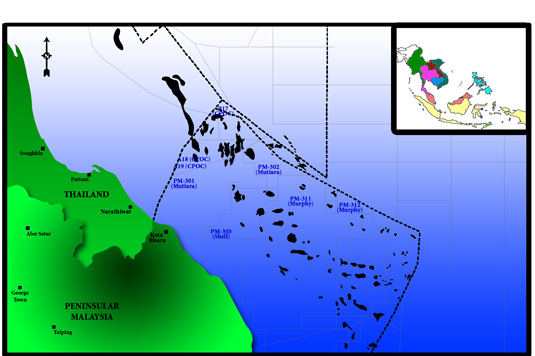
Di perairan Kelantan terdapat simpanan GAS ASLI sebanyak 13 trillion kaki persegi yang sudah sedia untuk diterokai. (13,000,000,000,000).
Ia cukup untuk 7 generasi rakyat Kelantan. (lebih kurang 500 tahun lamanya).
Ianya terletak di Blok-Blok berikut,
- Blok A18
- Blok B17 & C19
- PM3
- Sub-Blok Ular
- PM301 & PM302
- PM303
- PM311 & 312
Rakyat Kelantan menerusi kerajaan pimpinan Tuan Guru menuntuk hak Pendaratan GAS ASLI itu di buat di pantai Kelantan dan menuntut royalti GAS ASLI yang menjadi hasil bumi rakyat Kelantan di bayar kepada Rakyat Kelantan.
APA YANG BARISAN NASIONAL SEMBUNYIKAN DARI RAKYAT KELANTAN
Petronas mengesahkan bahawa operasi GAS ASLI di BLOK A 18 sudah bermula menerusi Syarikat Carigali HESS.
- Petronas memegang 50% saham di dalam syarikat tersebut menerusi Petronas Carigali Sdn Bhd dan 50% lagi dipegang oleh Aremada Hess Inc.
- Sekarang ini, operasinya mengeluarkan 6,000 tong GAS ASLI sehari.
- Jarak Blok A18 adalah lebih dekat ke Kota Bharu daripada di hantar ke Kerteh dan Songkla.
- Kerajaan BN bagaimanapun memilih pendaratan GAS ASLI itu dibuat di Songkla walaupun kosnya lebih tinggi akibat jarak yang jauh itu.
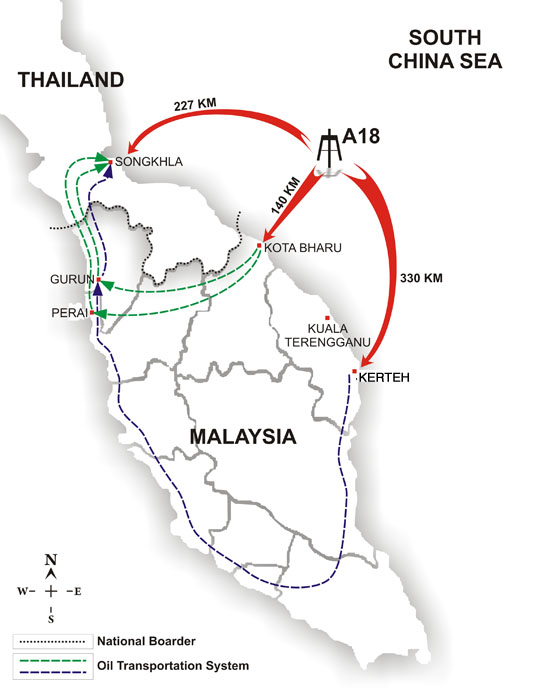
Dalam usaha mempertahankan hak rakyat Kelantan dan memperkasakan hasil bumi Kelantan untuk rakyat Kelantan, Kerajaan Kelantan pimpinan PAS telah meluluskan pembinaan Terminal Pendaratan Gas Asli dan juga Supply Base untuk Petroleum.
Menerusi penerokaan GAS ASLI di Blok A 18, setiap hari, Petronas sepatutnya membayar rakyat Kelantan royalti yang bernilai RM512,000.00 (RM512 ribu) sehari dan ini bererti Kerajaan Kelantan seharusnya mendapat pendapatan tambahan dari royalti GAS ASLI yang bernilai RM186,880,000 (RM186 juta) setahun.
- Menerusi hasil terbaharu ini, PAS Kelantan sudah berjanji untuk memberi subsidi gas memasak sebanyak RM3.00 se tong bagi rakyat Kelantan.
- PAS Kelantan juga akan menggunakan hasil pendapatan baru itu untuk tujuan kebajikan dan mempertingkatkan taraf hidup rakyat Kelantan serta membasmi kemiskinan.
PERANCANGAN OPERASI TELAGA-TELAGA GAS ASLI LAIN DI PERAIRAN KELANTAN
- Blok A 18 Fasa 2 pada tahun 2010
- Blok B 17 dan C 19 – Operasi bermula suku ke tiga 2009.
- Blok PM301 dan PM302 – Operasi bermula 2011 dan 2012
- Blok PM3 – Operasi bermula suku ke tiga 2008
Sebab itulah BN berusaha sangat merampas semula Kelantan kerana tidak mahu royalti GAS ASLI ini digunakan oleh Kerajaan PAS membangunkan Kelantan sehingga mengakibatkan Kelantan semakin pesat membangun dan membuat mustahil bagi BN untuk merampas Kelantan semula.
BERAPA BANYAK ROYALTI GAS ASLI YANG MENJADI HAK RAKYAT KELANTAN
Apabila semua telaga-telaga GAS ASLI ini beroperasi Royalti GAS ASLI yang akan diterima rakyat Kelantan ialah bernilai RM1,000,000,000 (RM1 Billion).
Sebab itulah BN mahu perampas Kelantan sebelum telaga-telaga GAS ASLI ini mula beroperasi.
ROYALTI GAS ASLI HAK RAKYAT KELANTAN
- PAS komited dan akan memperjuangkan habis-habisan bersama rakyat Kelantan untuk mendapatkan royalti GAS ASLI ini.
- Jika BN merampas Kelantan, royalti GAS ASLI tidak akan menjadi milik rakyat Kelantan dan rakyat Kelantan akan menerima nasib yang sama seperti Terengganu.
- Terengganu menikmati royalti minyak dan GAS ASLI sebanyak RM1.2 billion setahun di dalam bentuk wang ehsan.
- Wang Ehsan tidak diberi kepada kerajaan Terengganu tetapi disalurkan kepada orang tertentu seperti Patrick Lim untuk digunakan untuk projek seperti Monsoon Cup dan Pembinaan Taman Islam Hadhari yang tidak mendatangkan hasil terus kepada rakyat Terengganu.
- Jika BN memerintah, rakyat akan terus hidup dibelenggu kemiskinan dan ekonomi negeri akan semakin teruk seperti di Terengganu.
- Walaupun menerima RM1.2 billion setahun, rakyat Terengganu lebih miskin dari rakyat Kelantan.
- Hutang tertunggak Terengganu, lebih RM300 juta sedangkan hutang tertunggak Kelantan semenjak pemerintahan PAS hanya tinggal kurang RM12 juta.
Saturday, February 16, 2008
Westminster still in awe of Israel's ‘amoral thugs’
By Stuart Littlewood Last week there was a debate on Gaza in the UK Parliament. Very few people turned up. MP Jeremy Corbyn reminded everyone that 36 of the 39 Hamas Palestinian Legislative Council members the Israelis abducted in 2006 were still detained and some hadn't even been charged. “We cannot stand by and allow elected members of a fellow parliament to be arrested and held without charge or trial in Israeli prisons… More Palestinian legislators are in prison than legislators from all the other parliaments in the rest of the He also raised questions on settlements, the blockade of Gaza and the West's refusal to talk to Hamas. The minister with responsibility for the Middle East, Dr Kim Howells (a former chairman of Labour Friends of Israel), replied: "The government recognizes the impact and scale of the problems and the need to address all of them." He then dismissed Hamas as "a rejectionist Palestinian group" and tried to equate Gaza's home-made rocket launchings with Israel's crippling siege and high-tech military onslaughts that have killed 169 (at the time of writing) people and maimed hundreds more since the Annapolis “peace” meeting. "The United Kingdom urges restraint on all parties," was as firm as the minister got. As for Hamas, a political dialogue was impossible as long as one party was dedicated to violence and the destruction of the other. "The bedrock of our approach is to give every support to those who are committed to peaceful progress." What of the 90 chronically sick hospital patients who have died in agony for lack of drugs, equipment spares and proper nutrition, and over 300 more who face a similar fate unless the blockade is lifted? Well, desperate Gazans will be relieved to know that, according to Howells, "the United Kingdom remains committed to supporting Palestinians in Gaza". Douglas Alexander, Secretary of state for International Development, also fielded questions. Asked what assistance his department was providing to the people of Gaza, he said: "I and the foreign secretary have made repeated pleas to the Israeli government to recognize their obligations and ensure that the crossings are open for humanitarian supplies." Sir Gerald Kaufman asked: “Is it not a fact that only international action can bring to an end the humanitarian disaster caused by collective punishment imposed by the gang of amoral thugs who comprise the Israeli government and violate not only international law but the historic Jewish conscience?” Sir Gerald is one of many well-regarded Jews who are dismayed and disgusted with the Israeli government. "The British Government have been unequivocal in stating that Israel should abide by its commitment under the Fourth Geneva Convention," came the reply. Another MP, Michael Moore, said: “We are appalled by the scale of the humanitarian disaster in Gaza, but does the secretary of state agree that we have reached an extraordinary state of affairs when a UN representative can say: “Gaza is on the threshold of becoming the first territory to be intentionally reduced to a state of abject destitution, with the acquiescence of the international community? Does the secretary of state think that the scale of the Israeli response is disproportionate?” Alexander twittered about "active diplomatic efforts". In December he had discussed the Israeli government's "defence posture and humanitarian obligations" with Ehud Barak. Foreign Secretary David Miliband had raised those matters directly with minister Livni.
Then David Winnick asked: “Cannot the Western powers certainly this country, and I would hope the U.S. be much firmer with Israel and say that its actions cause dismay throughout the civilized world? How would Israeli citizens like to be subject to what the citizens of Gaza are subjected to by Israeli occupation?” This had Alexander ducking and weaving. It was time to play the Israel lobby's trump card Qassams! "Ultimately, both the Palestinians and the people of Israel have legitimate security concerns, but that is no reason why humanitarian supplies should not reach Gaza, nor why rockets should be fired on the Israeli population," he said. "It is imperative that all sides recognize their responsibilities." Miliband and Alexander later made a joint statement: “We continue to be deeply concerned by the growing humanitarian impact of restrictions by the government of Israel on industrial diesel supplies to Gaza. We welcome Israel's recent decision to increase the supply of industrial diesel and continue to urge them to lift all restrictions on fuel with immediate effect. “We utterly condemn the rocket attacks from Gaza into Israel. We support all efforts to stop these attacks consistent with obligations under international law.” Commitments to Geneva Conventions, obligations under international law none of them amount to a row of beans. It's time the grey suits in London and the rest of the west understood that, if they want the law to mean anything, they must enforce it. Righteous condemnation of the rockets is “de rigueur” of course, though only a smokescreen. Many in the occupied territories see that Annapolis was nothing more than an international fascade behind which a new phase of fiercer U.S.-backed Israeli aggression could be ushered in. Gaza's Qassams are a wonderful excuse for stepping up military action in pursuit of Israel's unlawful ambitions. In addition to the mounting atrocities in Gaza, Israel has been conducting 20-30 incursions a week into the West Bank, rounding up and killing members of assorted Palestinians groups with impunity. It might spoil the Israeli occupation forces’ fun if the home-made rockets were to stop. They'd have to invent another excuse for their depravity.
Sir Gerald's "gang of amoral thugs" are not the only villains. Israel's Chief Rabbi Yona Metzger advocates ethnic cleansing of Palestinians and says Muslims should recognize that "our land is the Holy Land and Jerusalem belongs to us". Metzger, reports Haaretz, wants Britain, the European Union and the United States to help construct a Palestinian state in Egypt's Sinai Desert. "They will have a nice country, and we, the Jews, shall have our country and we shall live in peace." However, Neturei Karta, an international group of non-Zionist Orthodox Jews, have issued a strongly worded press release that brands Metzger a Zionist stooge. "Any moral person would much prefer to see the Zionist warmongers, including Metzger, removed from the Holy Land." Neturei Karta argues that the state of “Israel” is illegitimate according to Torah teachings, and the establishment of a Jewish state is forbidden until Jews are released from exile by God Himself, without any human intervention, at which time all nations of the world will live together in peace. "Therefore, to oppress the Palestinian people, harm them, steal their land, expel them, etc. is totally forbidden according to our Holy Torah." It is a mistake, they say, to believe that you have to support Zionism in order to show friendship to the Jewish people. "True friendship can be demonstrated by saving all the peoples of the Middle East, including Jews, from the bloodthirsty machinations of the dangerous state of “Israel” and by dismantling the Zionist regime entirely." When Torah experts say the regime's conduct is incompatible with the moral teachings and ideals of Judaism, I'm not surprised. It doesn't sit well with Christianity either. How can pro-Israel MPs and ministers possibly ignore the fact that the Israeli government is waging war against the Holy Land's Christian communities, whom it terrorizes along with their Muslim neighbours, and is using pernicious administrative controls to disrupt the life and work of the church? Many Christians here are deeply angered by such criminality, and it's very odd that our elected representatives, who are mostly Christian themselves, don't feel similarly outraged on behalf of members of the church family who are so cruelly abused under Israeli occupation. Why there should be any support at all for Israel at the heart of British government is one of the greatest political mysteries of our time. We share no beliefs or values and we shouldn't even think about sharing foreign policy. Can it be that supposedly bright people with vast sources of information at their fingertips are still ignorant of Israel's apartheid practices, its wholesale land thefts, its careless slaughter of children and the slow genocide it inflicts on defenceless civilians, the break-your-door-down-in-the-middle-of-the-night snatch squads, the house demolitions, the torture and assassinations? Were those same bright people also unaware of the lies that persuaded them to commit our country to fight Israel's war with Iraq? I don't think so, which leaves only one other explanation. Of course, it's not just a Western weakness. Arab governments have “taken the dollar”. It's a cosy money-go-round that oils the wheels of the self-serving political élite and their puppet-masters as they trample the millions they have condemned to a life of misery. -- Stuart Littlewood is a businessman-turned-writer from Norfolk, England. He recently published a book entitled Radio Free Palestine about the plight of the Palestinians under occupation (see details on RadioFreePalestine.co.uk). This article appeared in Redress Information & Analysis. |

Wednesday, February 13, 2008
'Big boys' undermining non-proliferation regime
Mon, 11 Feb 2008 20:42:31
 |
The following is the full text of Director General of the International Atomic Energy Agency, Mohamed ElBaradei's speech at the 44th Munich Conference on Security Policy:
I usually look at security from a wide angle zoom. You look here from a European transatlantic zoom; I look at it not from a European zoom but from the Indian perspective, the Chinese, the Burkina Faso, and South African. I would like to spend a few minutes on this.
I saw it on the wall that the question is "Is the world in disarray?" and unfortunately my answer is "yes".
The world is in disarray. The world is going through a period of insecurity both at the individual level and at the state level. I think we all agree on that. You just look at the security we have to go at the airport. It's an awful kind of life we have to go through.
I look at insecurity from the very beginning, from poverty and I'll tell you how it ends up with weapons of mass destruction. I look also how weapons of mass destruction in fact exacerbate our insecurity. It doesn't solve any of our problems.
I'll just give you a few figures. We still live in a world where we have two billion people who live under $2 a day; one third of our fellow human beings. We have 850 million people who go to bed hungry every day.
James Morris used to run the World Food Program, told me that if he would get one percent on what we spent on our armaments a years nobody would go to bed hungry.
We have 20 thousand people who die every day because they are too poor to live. Sanctity of human life; are we serious about the sanctity of human life?
What did we do in 1994 when we lost 6 hundred thousand people, Tutsis in Rwanda? Are many of you aware that 3.8 million people died through the so-called second Congo War? Most of you don't even know that there was a so called second Congo War.
What are we doing right now in Darfur other than bringing our hand? I heard a lot of talk today about Afghanistan and your contribution. Right now we have 2 hundred thousand people who have lost their life in Darfur, over 2 million people who have been displaced.
I was told today that the UN could no even get 24 helicopters. The Secretary General also made a commitment for four from Ethiopia and Bangladesh. That is the offer he got.
You talk and we talk. We have chronic conflicts that have been going on for decades. Whether you are right or wrong the Palestinian issue has been there for 40 years. People have been under occupation for 40 years. Kashmir has been there for 50 years. The Korean issue has been there for 50 years.
These are conflicts that, no we cannot resolve, but we have no really invested in resolving.
We have the energy problem. We have the drug problem, organized crime and then extremism. We all talk about "the war on terror".
But we have to see where that is coming from. These are people who have lost hope, who are humiliated, who are repressed by their own governments; feel badly treated by the outside world. I always say that people are not born Mother Teresa or suicide bombers. It's the environment within which they grow up. And unless we change that environment, we will continue to see more extremism.
I come originally from this region (I've just been back) and I see the sense of anger, emotion, and humiliation that are there.
None of that stuff is going to be solved by hard power. I am always frankly stunned by that we are going to pour another 15 billion dollars into the Middle East. At the time the Middle East need the most education, governance, civil society. That's if you really want o reach out. It is not the hardware. It's a soft power.
I come to my area which is arms control. What is the environment? The environment that we still have 37 years after the NPT has been concluded. After a commitment by the weapon states to move towards a nuclear disarmament, we still have 27 thousand warheads. 27 thousand warheads in existence.
We still have weapons deployed at the so-called Cold War status alert. Sam Nunn will tell you who is the expert on that it is insane. That we need to redeploy so at least establish a physical barrier between the warhead and the delivery system. So at least move from half an hour when the president needs to order a retaliatory attack to a week. Why do we still maintain a Cold War status alert?
The nuclear technology is out of the tube. Completely out of the tube. We have seen that any country with an average infrastructure can develop the know-how to develop a nuclear warhead. And we have seen as witnessed by Iran a new phenomenon in addition to the nine weapon states you can be a nuclear weapon capable, while continue to be kosher within the NPT treaty. That is a new phenomenon, which you really have to address.
A lot of people including Iran, which I will come to, are really moving into that direction. You don't really need to have a nuclear weapon. It's enough to buy yourself an insurance policy, as I call it, by developing the capability and sit on it. You can come with an economic justification for it. But let us no kid ourselves, 90 percent of it is insurance. Is a deterrence? why do I have a deterrence? Because the big boys continue to rely on nuclear weapons.
The big boys continue to say we need nuclear weapons, we need to develop more modern nuclear weapons, we need mini-nukes, we need bunker busters, but it is bad for you to have nuclear weapons.
Simply if you go anywhere people will tell you this is called double standard. It is not sustainable. And I try as much obviously in my job to make sure that we do as much to avoid proliferation but we are working against the tide. Unless as Frank Walter mentioned weapon states have to lead an example. They have to show the way that we are making our way to move towards nuclear disarmament.
That is no now a fantasy. When I see people like George Schultz or Henry Kissinger or Sam Nunn talking about abolition, these are not people who are naive or no aware of security deterrents. These are people who through their maturity have come to the conclusion that nuclear weapons as they call it is increasingly hazardous, decreasingly effective and if you really want to protect ourselves, you need to move towards nuclear abolition.
The one issue which is also the most threatening to me is illicit trafficking: the possibility that extremist groups will get their hands on nuclear weapons or nuclear material. To me this is the biggest danger we are facing today.
Because any country-- even if they have nuclear weapons-- will continue to have a rational approach where the nuclear deterrents will apply. They knew if they use nuclear weapons they will be pulverized.
For an extremist group the concept of deterrents is irrelevant. If they have it they will use it.
We still have around 150 cases per year of illicit trafficking of nuclear material. That is a scary number. Thank God it is not the number that they can use to build a weapon but there is quite an obvious interest in that. The difficulty is that a lot of material stolen has never been recovered and a lot of the material recovered has never been reported stolen. The physical protection of this system needs a lot to be desired.
Whether these are individuals, whether there is organized crime behind them, whether worse here are terrorists, this is still a question mark. We need to know this is the number one security threat we are facing.
What should we do? We need to slash the number of nuclear weapons; we need to change the deployment status. We need to develop what I call a multinational approach to the fuel cycle. No country alone should have the capability to enrich or process. Germany is taking the lead in proposing a multinational enrichment facility.
In my view at the end of the day, every country should not have an enrichment facility or a reprocessing facility. We need to move on the multilateral disarmament, CTBT was considered the jewel in the crown of the Non-proliferation Treaty. It is lying somewhere I think in the cellar in the US. The treaty banning production of nuclear material for weapon purposes has been stalled for ten years.
So these are all doable things, which can send a very powerful message that the world is no moving towards more reliance on nuclear weapons but is moving towards abolition of nuclear weapons. In that environment you will have a much stronger moral authority to go after any new proliferate and as Kissinger has said we obviously need a system to deter and respond to possible cheaters.
I mean we are not just going to abolish, we need a system to do that.
Finally I think what we really need to do is we need to have a new global security structure that does not depend on nuclear weapons. I heard a lot here about transatlantic security and I ask you to also consider the security of others. You are one third of them, this global village that we have.
You need to consider the question, shield versus abolition. That is the question you should legitimately ask. You should ask yourself is it hardware versus software. Is it hardware that is going to protect us or the software, or the soft power if you like.
You need a global institution. We all talk about NATO but we haven't really talked about the UN. You need the UN. This is the global institution; you need to empower the Security Council. You need to empower the UN to be able. NATO could be the military arm authorized by the UN, as it has been done in Afghanistan.
Not in Kosovo. Kosovo was legitimate but not legal in my view. However I was needed. But you need to get the authorization by the Security Council and by the UN. Because that is the global system you need to have.
Finally on the elephant in the room which is Iran. Here is a lot I can say but I can basically say a few words.
There is three phases of Iran. There is the past, the present and the future.
The past as mentioned they have not been very transparent in telling us what they have being doing in term of experiments I should say. We have in terms of experiments in terms of procurement. Their argument that they were not able to get anything is also true. They could not get a nuclear power reactor; they had to go underground.
However, it created a confidence deficit, because they did not report to us. They were in violation of their treaty obligations. We have to reconstruct that past.
We are making good progress and I am going to report at the end of the month. We are making good progress in clarifying the past. The only remaining issue in fact raised in the NIE whether hey had any weaponization activity is the most difficult, is the most tricky.
But we are working on it in fact this week to try to see whether in fact they had a program in the past and if they did, they have to come clean.
On the present, I think although they are not implementing de jure the Additional Protocol, de facto they are allowing us to have a good understanding of what is happening today.
Then we come to the most complex issue which is the future. Basically the suspension is a statement by the Security Council, we do no trust you to have that technology and therefore you should suspend and obviously they have been urging the Iranians to suspend in order to build confidence.
I should make this clear this is an issue which is not verifiable. I cannot verify future intentions; I cannot verify a regime behavior in the future. That is clearly a question of confidence building.
Confidence could only be built through direct negotiations, you can have sanctions, you can have pressure, but at the end of the day it's a question of we don't trust this regime because of its behavior we don' trust this regime because it has certain ideology.
Or the regime will tell you, as they will tell you, they also have their own insecurities, whether you agree with them or not.
That's why I keep always saying that you need to get in direct negotiations. The earlier we get into direct negotiations which would clearly cover the regional security, because the Iranian issue is the tip of the iceberg of regional security in the Middle East.
The earlier we can do that I think the better secure all of us will be.
You can listen to the speech at www.securityconference.de, the official website of the Munich Security Conference.
MT/RE
Sports & Electronics

Import - Export Business


.jpg)


